This page provides information concerning periodic, scheduled USDA, Economic Research Service (ERS) outputs on dairy and recent ERS reports related to dairy.
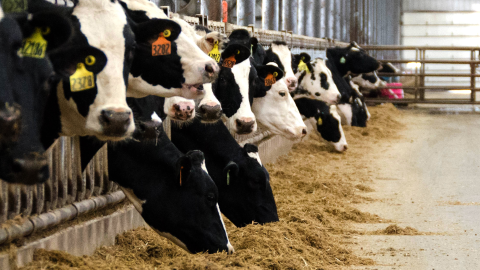
Milk is produced in all 50 States, with the highest producing States in the western and northern areas of the United States. Dairy farms—largely family owned and managed—are generally members of producer cooperatives. Over years, the industry has seen a consistent decline in the number of operations matched by a rise in the number of cows per operation. Dairy products include fluid beverage milk, cheese, butter, ice cream, yogurt, dry milk products, condensed milk, and whey products. For more U.S. dairy-related information, see Background, Market Outlook, Trade, Policy, and Readings.
ERS provides data and reports on dairy markets, including domestic and international supply, demand, trade, and prices.
Periodic, Scheduled Outputs Relating to Dairy
- Livestock, Dairy, and Poultry Outlook (LDP) is a monthly report that provides supply and use projections for U.S. livestock, dairy, and poultry markets based on USDA, World Agricultural Outlook Board’s most current World Agricultural Supply and Demand Estimates (WASDE) report.
- Dairy Data is a dataset that includes files covering domestic supply, demand, and trade of various dairy products. Data on the U.S. dairy situation and commercial disappearance are updated monthly, and U.S. milk production and related data are updated quarterly. All other data files are updated annually. These include data on dairy per capita consumption; fluid milk sales; milk supply by State and region; milk production and factors affecting supply and utilization of milk in all dairy products; and numbers and size of milk bottling plants.
- WASDE at a Glance is a monthly interactive visualization that provides key data and highlights from the most current WASDE report on livestock and dairy as well as field crops.
- Commodity Costs and Returns is a data product that provides annual estimates of production costs and returns for major field crops, milk, hogs, and cow-calf operations.
- Price Spreads from Farm to Consumer is a data product that compares prices paid by consumers for food with prices received by farmers for corresponding commodities.
- Long-Term Agricultural Baseline Projections provide a scenario for the U.S. farm sector and global trade for the next 10 years. Projections cover agricultural commodities, agricultural trade, and aggregate indicators of each sector (such as farm income). The projections identify major forces and uncertainties affecting future agricultural markets; prospects for global long-term economic growth, consumption, and trade; and future price trends and trade flows of major farm commodities. Additionally, the Agricultural Baseline Database provides multiple resources enabling user to navigate the USDA’s 10-year domestic agricultural projections.
Recent ERS Reports Relating to Dairy
In addition to the periodic Outlook reports and data products, ERS produces reports covering timely issues important to dairy markets across the United States and world.
Recent ERS publications relating to the dairy sector include:
-
Fewer Farms, More Milk: The Changing Structure and Costs of U.S. Dairy Farming
Consistent with longer-term trends, U.S. milk production has increased over the past two decades, while the number of dairy farms has decreased. Dairy farm size, measured by the number of milk cows, has increased. Compared with dairy farms with fewer cows, larger dairy farms have lower costs per unit of milk produced, though some dairy farms in all size classes have been profitable.
-
Precision Dairy Farming, Robotic Milking, and Profitability in the United States
ERS research shows that U.S. adoption of precision dairy technologies related to milking, breeding, and data systems has increased steadily since 2000. These technologies include sensors, data analytics, and automation, among others, which help operators to manage at the cow level rather than herd level. This report finds that robotic milking, or use of two or more precision technologies from the broader set of technologies studied, increases U.S. farmers’ dairy net returns by 13 percent on average.
-
Food products sold at retail stores may carry a variety of claims on packaging, including claims about human health (low fat), environmental stewardship (USDA Organic), and the types of inputs used in making the food (non-genetically modified organism or non-GMO). This study examines which claims appeared most frequently on fluid milk and yogurt product packaging, the number of claims that appeared on products, which ones were complementary (appearing together), and which ones competed for consumers’ attention (appearing on separate products). Emphasis is placed on claims related to farm production methods.
-
USDA, Economic Research Service publishes annual costs and returns estimates for 12 major agricultural commodities (field crops, livestock, and milk) as part of the agency’s Commodity Costs and Returns data series and Milk Cost of Production Estimates data series. The estimates are published biannually at national and regional levels for all commodities and at the state level for milk. This report provides information on the methods and data sources used by USDA to develop its Commodity Costs and Returns estimates.
- "Falling Milk Prices Led to Record Program Payments for Dairy Producers in 2023"
The Federal Dairy Margin Coverage (DMC) program compensates dairy producers when the difference between milk prices and feed costs drops below the selected coverage level. Milk margins and participation under this program are analyzed from 2019 to 2023 (Amber Waves, September 2024).
This study uses USDA’s Agricultural Resource Management Survey data from 2005, 2010, 2016, and 2021—along with other USDA data—to examine changes in farm structure, production costs, technology adoption, and challenges facing organic dairy producers over the past two decades. The report shows that growth of organic milk production has differed by U.S. State, with regional differences in farm structure and cost of production (ERR-335, September 2024).
For more ERS publications on dairy see Readings.