



Food insecurity declines in most low- and middle-income countries in 2026, but challenges persist
- by Yacob Abrehe Zereyesus and Jarrad Farris
- 10/8/2026
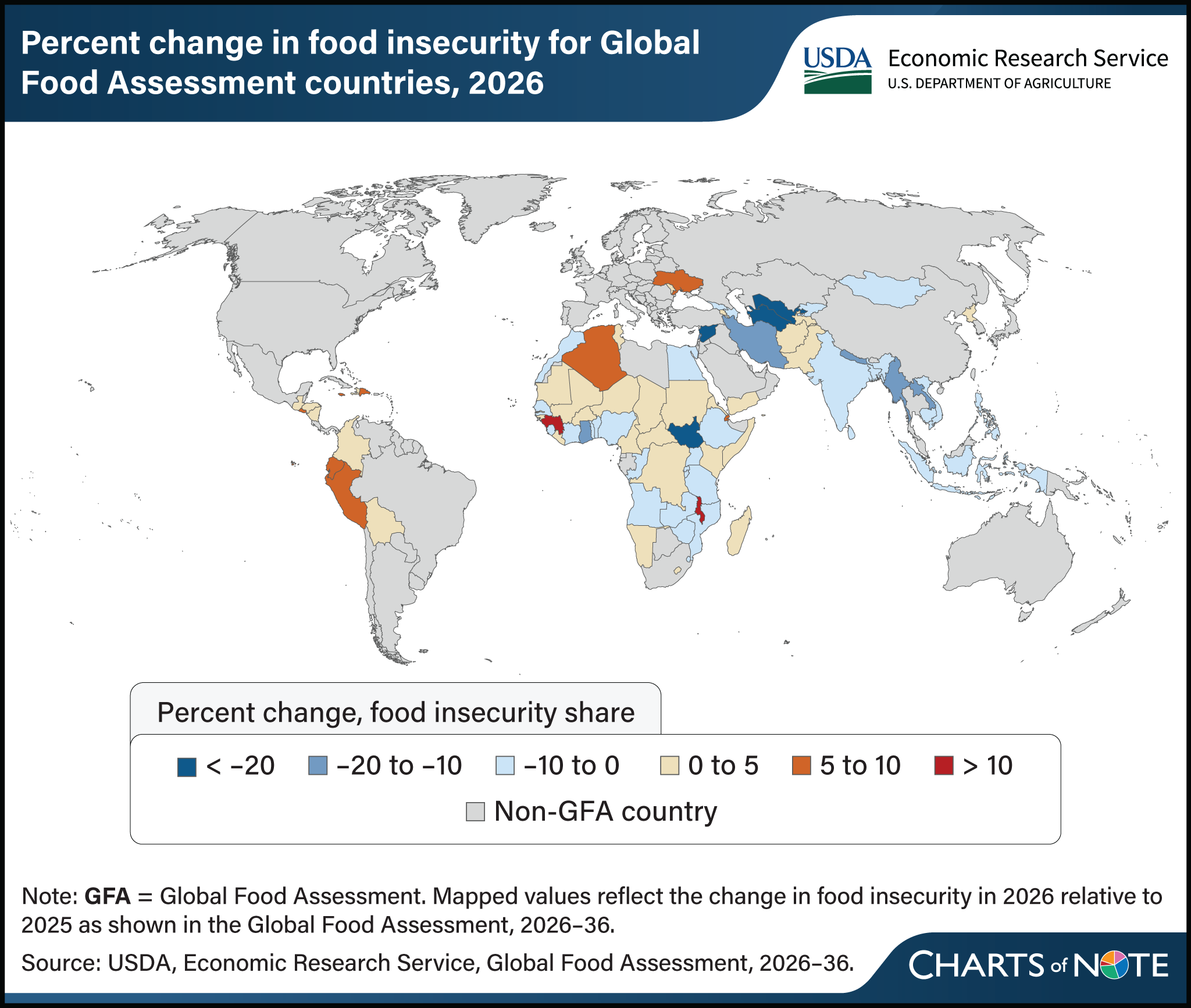
Food insecurity in 2026 is estimated to affect 884.4 million people, or 19.5 percent of the population across the 83 low- and middle-income countries included in USDA, Economic Research Service’s (ERS) annual Global Food Assessment (GFA). GFA estimates food demand in countries where domestic production alone cannot meet demand, highlighting opportunities for U.S. agrifood products to address gaps. The 2026 GFA projects a reduction in food insecurity rates compared to 2025 in most countries, due in part to rising per capita Gross Domestic Product and easing food price inflation. While most countries and regions are projected to experience a reduction in the prevalence of food insecurity in 2026 relative to 2025, local shocks and structural vulnerabilities may lead to persistent or worsening food insecurity in some countries, particularly in the Sub-Saharan Africa and Latin America and Caribbean regions. Over the longer term, food security is projected to continue to improve globally. By 2036, the number of food-insecure people in GFA countries is projected to decline by 33.4 percent to 589 million people, or 11.4 percent of the GFA population, based on macroeconomic assumptions used in the report. This chart appears in the ERS report, Global Food Assessment, 2026–36, released in August 2026.
We’d welcome your feedback!
Would you be willing to answer a few quick questions about your experience?