




U.S. farmers’ adoption of genetically engineered crops continued to increase in 2025
- by Laura Dodson
- 9/24/2026
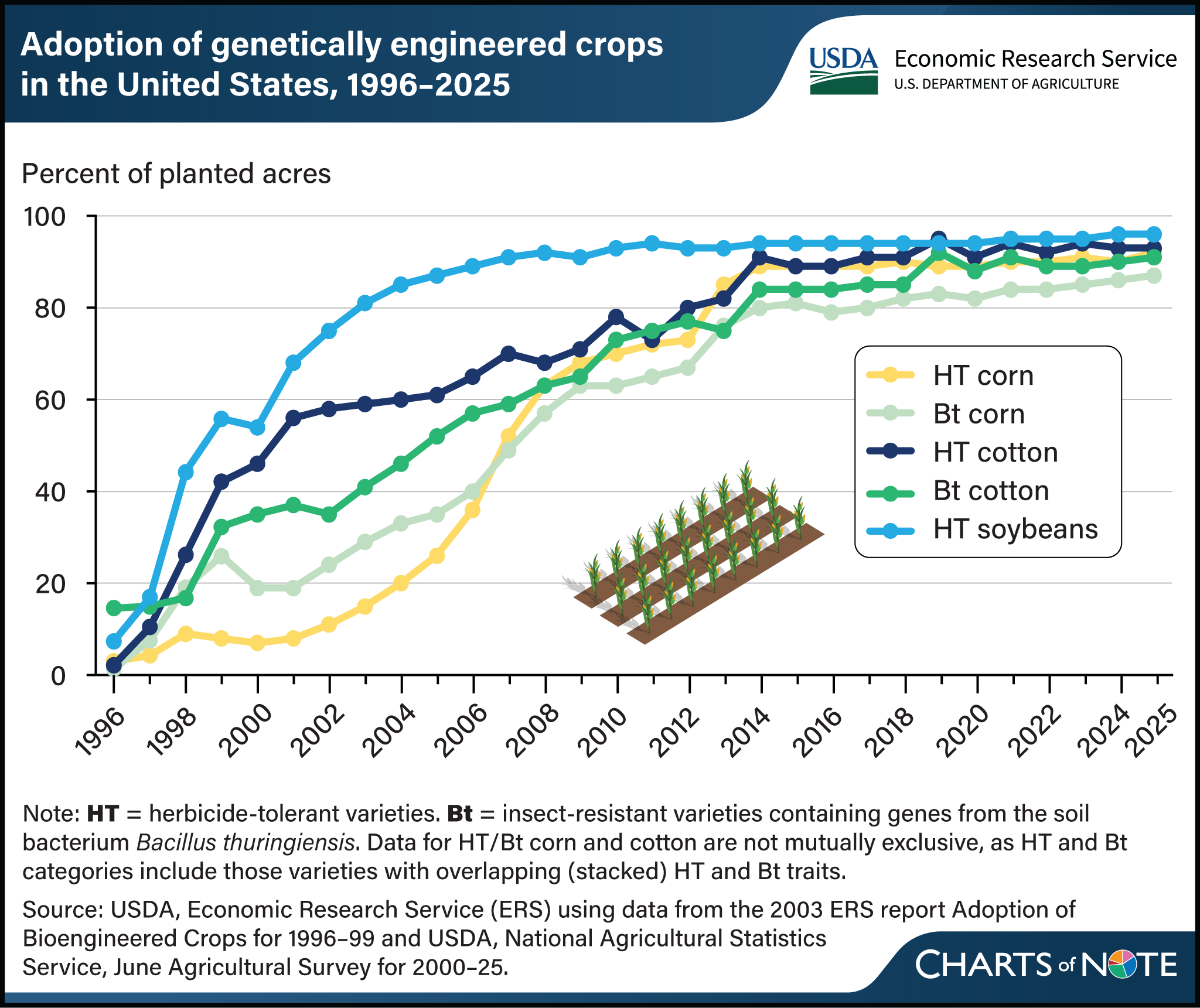
Genetically engineered (GE) seeds were commercially introduced in the United States for major field crops in 1996, with adoption rates increasing rapidly in the years that followed. The two main GE trait types in the United States have been herbicide tolerance (HT) and insect resistance, the latter involving traits that most commonly use the soil bacterium Bacillus thuringiensis (Bt). Seeds can be produced with either of these traits, though there has been increasing production of “stacked” seeds, which combine both HT and insect resistance traits. USDA, Economic Research Service (ERS) reports information on GE crops in the data product Adoption of Genetically Engineered Crops in the United States. These data show that by 2008, more than 50 percent of corn, cotton, and soybean acres were planted with at least one GE seed trait. Today, more than 90 percent of corn, cotton, and soybean acres are planted using at least one GE trait. Traits other than HT and Bt have been developed, such as non-Bt resistance to insects; resistance to drought, viruses, or fungi; and enhanced protein, oil, or vitamin content. However, HT and Bt traits are the most commonly used traits in U.S. crop production. While HT seeds also are widely used in alfalfa, canola, and sugar beet production, most GE acres are occupied by three major field crops: corn, cotton, and soybeans. This chart appears in the ERS topic page Biotechnology, published in December 2025.
We’d welcome your feedback!
Would you be willing to answer a few quick questions about your experience?