



Pressurized irrigation systems dominate Western farmland, replacing gravity methods as efficiency increases
- by Nicholas Potter
- 1/9/2026
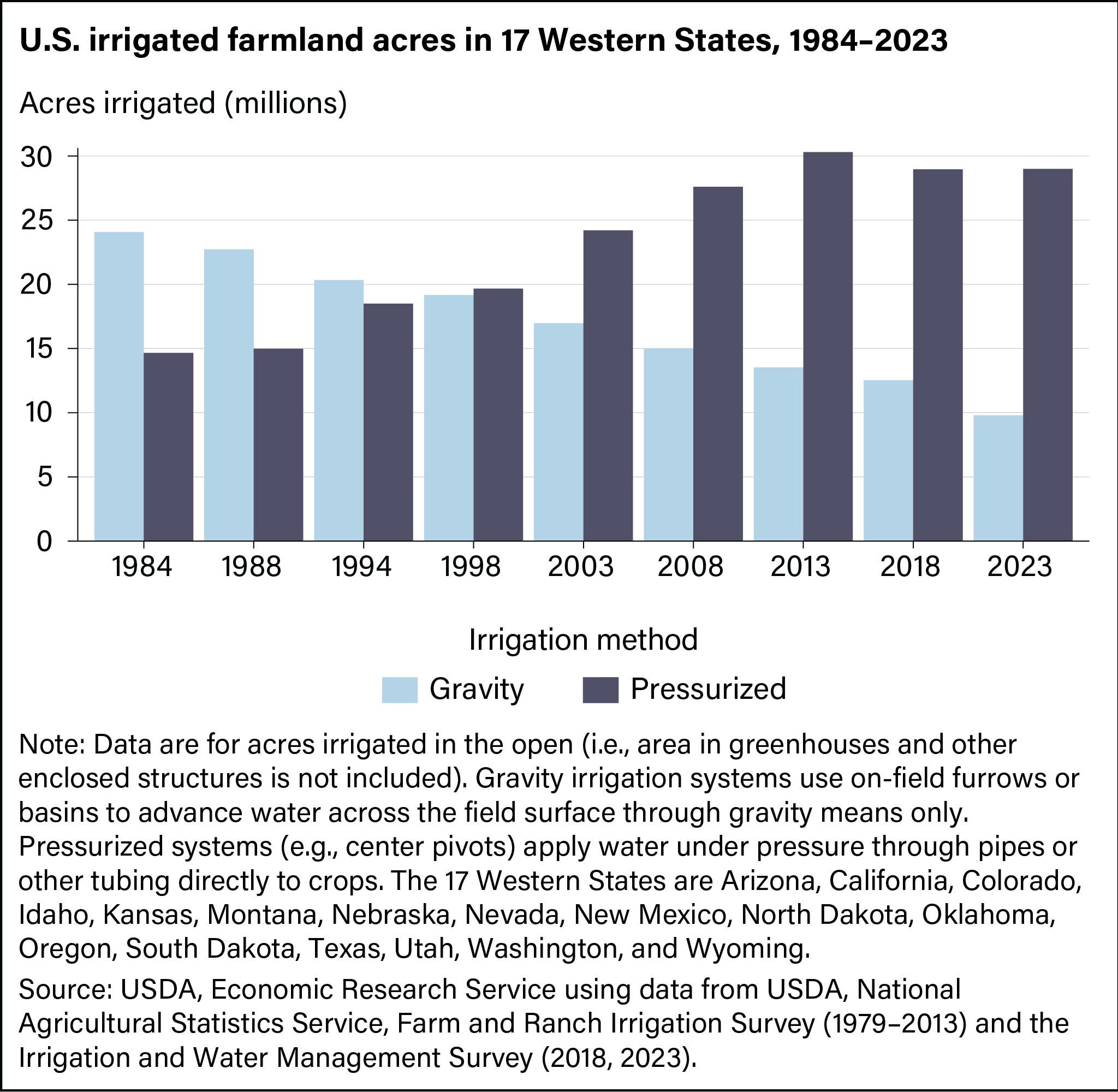
U.S. irrigation relies on two main methods: gravity and pressurized systems. Gravity systems move water across a field’s surface through on-field furrows, basins, or poly-pipe using gravity only. Pressurized systems apply water under pressure through pipes or other tubing directly to crops (e.g., sprinkler and micro/drip irrigation systems). In general, pressurized irrigation systems use water more efficiently than gravity systems because less water is lost to evaporation, deep percolation, and field runoff. From 1984 to 2013, the number of acres irrigated using pressurized irrigation systems roughly doubled. Concurrently, the acreage irrigated using gravity systems declined to less than half of 1984 levels in the Western States, where a generally arid climate has required irrigation in many areas. In 2023, pressurized irrigation systems accounted for 75 percent of irrigated acres, up from 69 percent in 2013. However, this increase in acres irrigated was due mainly to a decrease in the use of gravity systems, which declined from 13.5 to 9.8 million acres from 2013 to 2023. Over those 10 years, acres irrigated with pressurized systems also decreased, although not as much as gravity-based systems, from 30 to 29 million acres.
We’d welcome your feedback!
Would you be willing to answer a few quick questions about your experience?