



Use of surface or groundwater for irrigation depends on regional water availability, legal institutions, and infrastructure investments
- by Nicholas Potter
- 1/9/2026
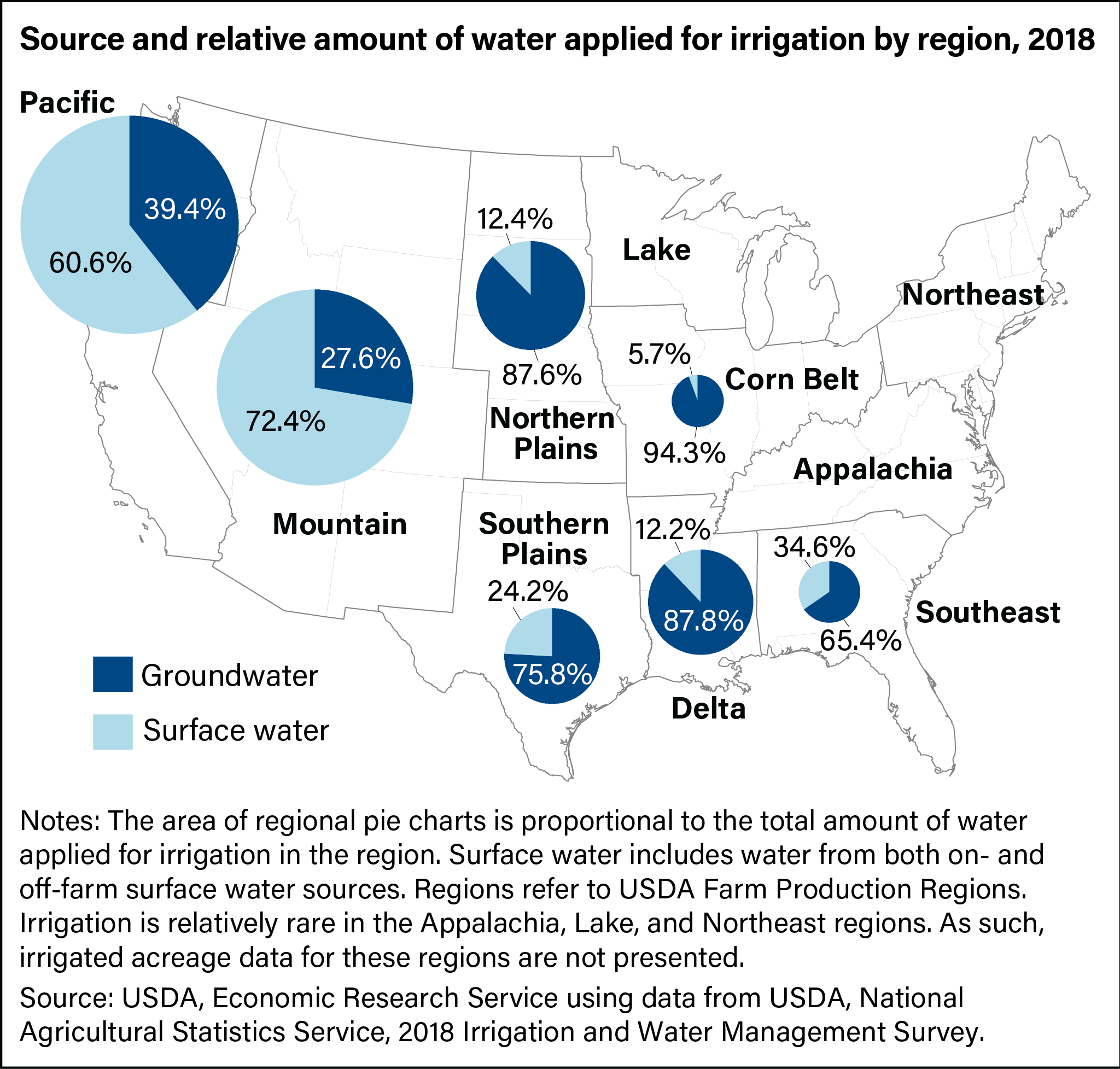
Surface and groundwater are the two primary sources of water for irrigated agriculture. Groundwater is pumped from aquifers, while surface water is diverted from natural streams, rivers, and lakes. The reliance on each varies according to the resources available in different regions of the United States. Groundwater is the most common source of water applied for irrigation in the Mississippi Delta, Northern Plains, and Southern Plains regions. The prevalence of groundwater-fed irrigated agriculture in the Northern and Southern Plains relates to the regions’ historically abundant groundwater resources. The High Plains Aquifer (also known as the Ogallala Aquifer), is the largest aquifer in North America and underlies significant portions of the Plains regions. The Mississippi Delta region also has abundant groundwater resources that are relatively near the surface, making groundwater-based irrigation less expensive. In contrast, surface water is the most prevalent source in the Mountain and Pacific regions due to Federal, State, and local investments in water conveyance and storage infrastructure, and legal frameworks in these regions which grant water rights based on historical beneficial use rather than ownership of land along streams and rivers.
We’d welcome your feedback!
Would you be willing to answer a few quick questions about your experience?