



The average prevalence of food insecurity in 2021 is estimated to be almost 7 percentage points higher than in 2020
- by Felix G. Baquedano, Yacob Abrehe Zereyesus, Constanza Valdes and Kayode Ajewole
- 9/7/2021
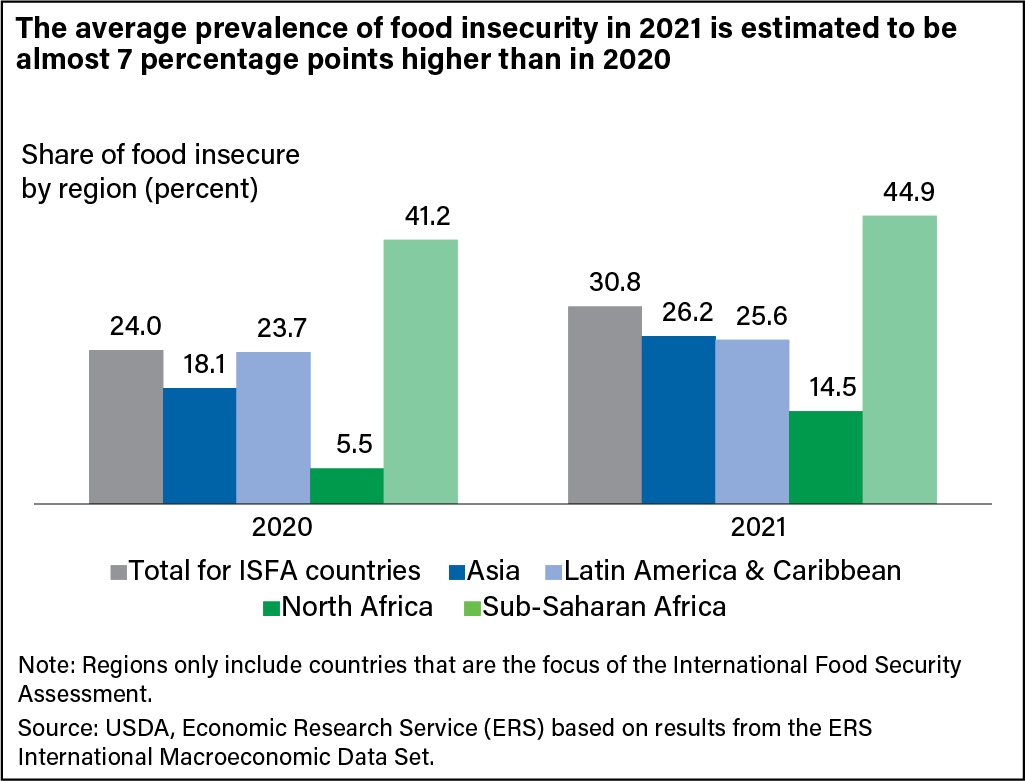
Food insecurity around the world can be intensified further by negative shocks to income, prices, or the food supply like those sparked by the Coronavirus (COVID-19) pandemic. This article analyzes food security conditions in 76 low- and middle-income countries. It found that income levels that remain below 2019 levels and fluctuating food prices continued to negatively impact food insecurity in 2021 for all 76 countries.
We’d welcome your feedback!
Would you be willing to answer a few quick questions about your experience?